A Little About Your Loaf: Understanding Sourdough Bread Hydration
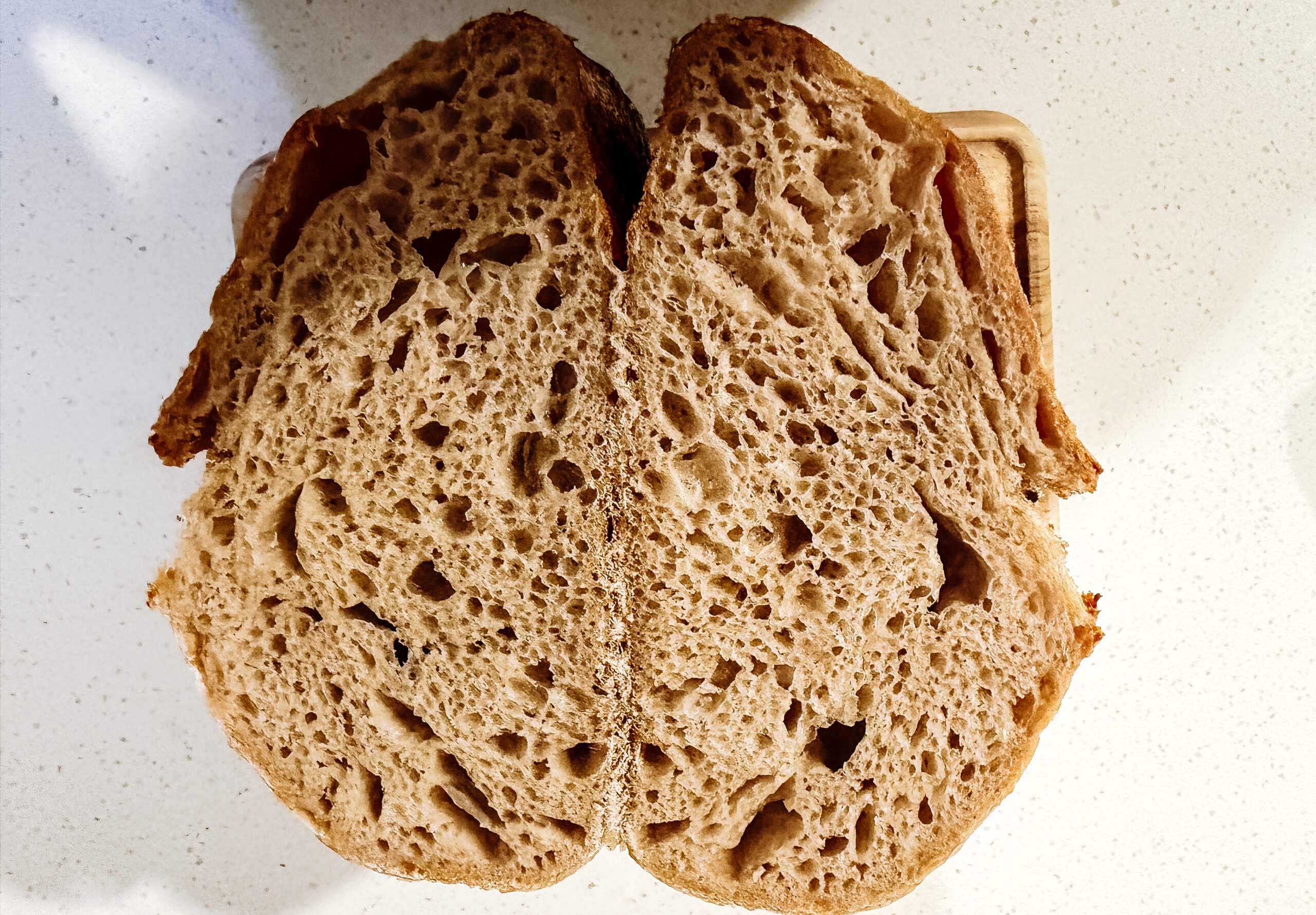
You sliced into your loaf and thought — wait, is this done? I get it. Artisan sourdough looks different from what most of us grew up with. That open, custardy crumb isn't a mistake. It comes down to one thing: sourdough bread hydration.
What Sourdough Bread Hydration Actually Means
If you've ever bought a loaf from Home & Fed Co. — or any small-batch artisan bakery — and wondered why the inside looks softer, more open, or almost "wet" compared to grocery store bread, this post is for you.
Sourdough bread hydration refers to the ratio of water to flour in the dough. It's expressed as a percentage — and it controls almost everything about how your bread looks, feels, and tastes. The crust. The crumb. The texture. The flavor. All of it traces back to hydration.
Most grocery store bread is made at 60–65% hydration. Our loaves at Home & Fed Co. are baked at 76% — sitting at the upper end of what bakers call medium-to-high hydration. That extra water is what creates the thin, crackly crust and the open, airy crumb with larger, uneven holes. It's not undercooked. It's not a mistake. It's what separates real artisan bread from the shelf-stable loaves most people are used to.
Think about the difference between a rubbery scrambled egg and a soft, silky one. Or a well-done steak versus one cooked just right. The texture feels different — because it is different. And once you understand why, you'll never go back.
Why You'll Love Artisan Sourdough Bread
- The crust is everything. A thin, crackly crust that shatters when you slice it — that's the result of high hydration and high heat working together.
- The crumb is custardy, not gummy. Those large, open holes aren't raw dough. They're pockets of air created during long fermentation and released during baking.
- The flavor is more complex. More water means more room for fermentation, which means a deeper, more nuanced flavor — mild and tangy without being aggressively sour.
- It's made with better ingredients. Every loaf from Home & Fed Co. is made with 100% organic flour — no shortcuts, no fillers.
- It's real bread. The kind that's been made for centuries, before commercial bread was engineered for shelf life over flavor.
What Makes Sourdough Bread Hydration Matter
Most commercial bread is made at 60–65% hydration. It's easier to mix, easier to shape, and produces a tight, uniform crumb that slices clean and stays soft for days. That's by design — it's optimized for mass production, not flavor.
Our sourdough at Home & Fed Co. sits at 76% hydration. The dough is sticky and extensible, requires a different shaping technique, and behaves completely differently in the oven. The result is bread that's harder to make but infinitely more rewarding to eat.
Here's a quick breakdown of what hydration actually means:
- Low hydration (60–70%) — Easy to handle, tight crumb, similar to traditional sandwich bread. Great for beginners.
- Medium hydration (70–75%) — Soft, slightly sticky dough. More open structure, pillowy interior. Your everyday sourdough loaf.
- Medium-high hydration (75–80%) — Where our loaves live. Sticky, extensible dough that requires strong gluten development. Thin crispy crust, open and custardy interior.
- High hydration (80–90%+) — Very wet, very slack dough. Maximum open crumb. Requires advanced technique and strong flour.
A Little About Your Loaf — What to Expect
If you're new to artisan sourdough, here's exactly what you should expect when you get your loaf home.
The crust will be crackly and crisp when it's fresh. After the first day, it softens slightly as it absorbs moisture from the crumb — that's completely normal.
The crumb will look open and airy with larger, uneven holes. It may appear slightly moist or custardy. This is intentional. It is fully baked. Every loaf is temped to 205–210°F internal before it leaves the oven.
The flavor is mild and complex from long fermentation — not aggressively sour. It deepens after the first day.
Best enjoyed: Sliced after fully cooled (at least 1–2 hours after baking), with good butter, olive oil, or just as is. Lasts 3–4 days at room temperature or freeze for later.
Recipes for Every Last Slice of Sourdough
One of the best things about artisan sourdough bread? It's endlessly versatile. Here are some of our favorite ways to use every last bit — including the end pieces.
- Avocado toast — The open crumb holds up to toppings without getting soggy
- French toast — Custardy bread makes custardy French toast. It's a natural fit.
- Panzanella — Tear day-old slices into a summer tomato salad
- Soup dipper — Thick slices alongside a bowl of tomato or homemade chicken noodle soup
- Grilled cheese — High hydration bread grills beautifully, crispy outside and chewy inside
- Homemade croutons — Don't let a single slice go to waste (grab a bag of our house-made sourdough croutons at the next market)
- Bread bowl — Hollow out a round loaf and fill with your favorite soup or dip
More recipes using sourdough bread coming soon at https://homeandfed.com/sourdough-bread-hydration.
How to Store and Care for Your Sourdough
Getting the most out of your loaf comes down to a few simple habits.
- Room temperature storage is your best option for the first few days. Keep it in the bag it came in, away from direct sunlight and heat. A cool, dry spot on your counter works great. Avoid the fridge — refrigeration actually stales sourdough faster by pulling moisture out of the crumb.
- How long does it last? Longer than you'd think. Properly stored at room temperature, your loaf will stay good for 4–6 days. Storage environment matters — humidity, airflow, and how often you open the bag all play a role. One of our loaves kept in the bag in a cool microwave (off!) was still making perfect avocado toast on day six. That said, every kitchen is different.
- For longer storage, freeze it. Slice the whole loaf before freezing so you can pull out exactly what you need. Thaw at room temperature, or go straight from freezer to toaster. It comes back beautifully.
- To revive the crust, pop slices in a toaster or place the whole loaf in a 350°F oven for 5–8 minutes. The crust crisps right back up.
- Best sliced after fully cooled — at least 1–2 hours after baking. Cutting into a warm loaf releases steam too fast and can make the crumb feel gummy even when it's fully baked.