Ultimate Chewy Chocolate Chip Cookies

The chocolate chip cookie that started it all.
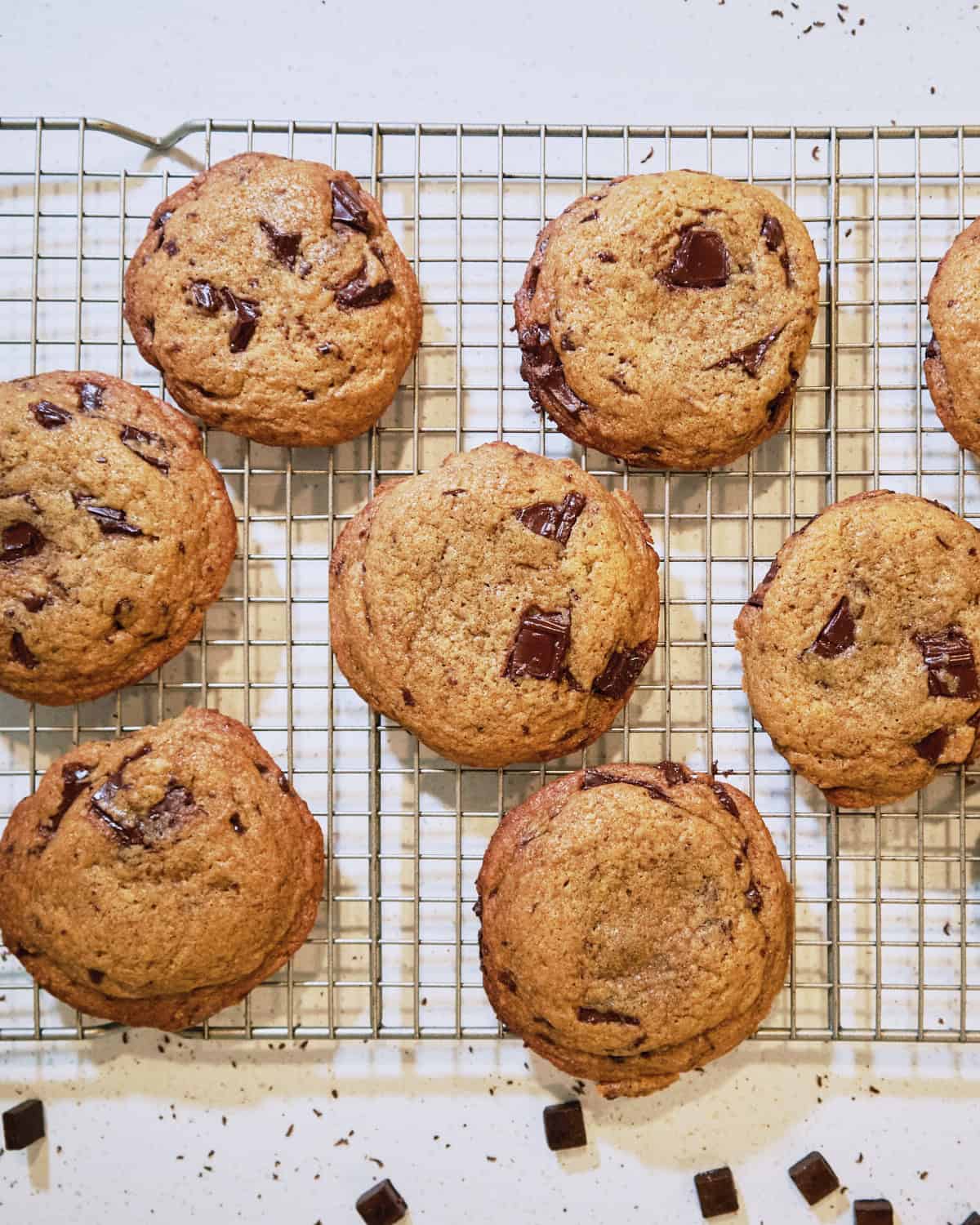
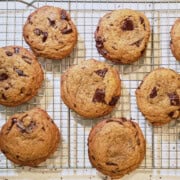
Chewy chocolate chip cookies with melted chocolate chunks cooling on wire rack
Golden brown perfection—thick, chewy cookies with melted chocolate pools.

Why These All Brown Sugar Chocolate Chip Cookies Belong in Your Recipe Box

I've been making these cookies since high school—back when I'd batch-bake dozens for the baseball team, armed with nothing but imitation vanilla, questionable butter, and way too much baking soda. They were… edible. Barely.

Fast forward 15+ years, countless recipe tweaks, and one memorable altitude-induced disaster in Denver (turns out elevation does matter), and I've finally landed on what I'm calling my ultimate version. These bakery-style beauties are thick, chewy, loaded with melty chocolate chunks, and made with one secret weapon that changes everything: all brown sugar.

No white sugar. Just 10 ounces of packed light brown sugar that creates cookies so chewy they stay soft for days, with deep caramel notes that make every bite worth the decade-plus of trial and error.

Why You'll Love This Chocolate Chip Cookies

Bakery-style thick and chewy texture. These cookies are substantial, with crispy golden edges and soft, pillowy centers that stay perfect for days thanks to brown sugar's moisture-holding superpowers.

All brown sugar formula. Using 100% brown sugar instead of splitting white and brown creates incredibly chewy cookies with complex molasses-forward flavor that regular chocolate chip cookies just don't have.

Melted butter method. Inspired by Alton Brown's approach, melting the butter creates denser, chewier cookies with concentrated flavor. The key is cooling it first—hot butter scrambles eggs (learned that one the hard way).

Ghirardelli chocolate chunks. This was my most recent game-changer. I used to be that person who didn't even like the chocolate in chocolate chip cookies. But switching from standard chips to hand-chopped Ghirardelli bars? Total convert. The chocolate stays melty even after cooling, creating gorgeous pools and streaks.

Freeze-ahead friendly. I tried this for the first time for Thanksgiving and drove 5 hours with pre-scooped frozen dough balls in a cooler with ice packs. They were a hit. Did they last 3 months in my freezer? No—but that's because we kept baking them. It's so nice having them pre-scooped for when you want a quick, fuss-free dessert.

Perfect for gifting. These are the cookies that get requested every time I visit friends and family. Now everyone can make them themselves instead of waiting until we're in the same city.

What Makes This Recipe Different

If you've been following food blogs for a while, you know chocolate chip cookies are everywhere. Everyone has "the best" version. So what makes mine worth your time?

Most recipes split between white and brown sugar. I use 100% brown sugar, which creates an incredibly chewy texture with complex molasses-forward flavor. Brown sugar attracts and holds onto moisture, which means these cookies stay soft and tender for days.

The melted butter approach comes straight from Alton Brown's playbook—it produces denser, chewier cookies with more concentrated flavor. Combined with bread flour's higher protein content (12-14%), you get that coveted bakery-style thickness that doesn't spread paper-thin.

If you've ever had Silos Baking Co.'s cookies at Magnolia Market in Waco (Joanna Gaines' bakery), you'll recognize the thick, chewy texture I was chasing. Their cookies are legendary for a reason—they're substantial, satisfying, and somehow stay perfectly chewy. While my recipe isn't a copycat, I definitely studied their approach to thickness and texture.

And here's my confession: for years, I'd make some dough without chocolate chips because I actually preferred those. The chocolate just wasn't doing it for me. But switching to hand-chopped Ghirardelli semi-sweet baking bars? Complete game-changer. The chocolate stays melty even after the cookies cool, and suddenly I'm a believer.

What you'll need for this recipe.

  • Before You Start. Use a Kitchen Scale. Real talk. If you want consistent results every time, invest in a kitchen scale. Get one that measures both grams and milliliters — it'll change your baking game. Trust me on this. Why weighing is better than measuring cups: Flour can vary by up to 20% depending on how you scoop it. You might get 340g one time and 410g the next, which completely changes your cookie texture. Scooping directly from the bag packs more flour than spooning it in. Even humidity affects how flour settles in a measuring cup. When you weigh ingredients, you get 340g every single time. Consistent measurements = consistent cookies. It's the difference between flat, cakey cookies and thick, chewy ones.
  • The Butter Situation. Melted Unsalted butter (16 Tbsp/227g) - I use Vital Farms unsalted butter after reading this article from Serious Eats about butter quality, but when it's not available, I go with Kerrygold. My next option is Trader Joe's butter, which has been the OG butter for me since the beginning. You're melting it, so quality matters—the flavor comes through. The cooling step is critical: hot butter will cook your eggs. It creates denser, chewier cookies. This is Alton Brown's method, and it's a game-changer.
  • The All Brown Sugar Secret. Light brown sugar (10 oz/280g, packed) - This is where the magic happens. Most recipes use 6-8 oz brown sugar plus white sugar. Using a full 10 oz of brown sugar maintains proper sweetness while maximizing that incredible chewy texture.
  • The Flour Choice. Bread flour OR all-purpose flour (12 oz/340g) - Bread flour's higher protein content creates more gluten structure, which means thicker cookies that don't spread as much. This is especially beneficial when using melted butter and all brown sugar (both increase spread). All-purpose flour works perfectly fine but produces slightly thinner, more tender cookies.
  • The Leavening (Must Be Fresh!). Baking soda (7-8g/about 1 tsp) - This MUST be fresh. Test it by adding ½ teaspoon to 2 tablespoon hot water—it should fizz vigorously. If it doesn't, replace it. Old baking soda means flat, dense cookies.
  • The Balancer. Salt (7-8g/about 1 tsp). Balances the sweetness and enhances flavor. Don't skip it.
  • The Eggs & Dairy. 1 large egg + 1 large egg yolk - This is another Alton Brown trick. Most recipes use 2 whole eggs. Using 1 egg + 1 extra yolk adds fat and creates richer, more tender cookies while the whole egg provides structure. Milk (2 Tbsp/30ml) - Adds moisture and helps create that perfect chewy texture. I've done this with whole milk and oat milk before—both work great.
  • The Flavor Boosters. Vanilla extract (20g/about 4 tsp) - Yes, 4 teaspoons! Most recipes call for 1-2 teaspoons. I'm doubling or even tripling it. Think of it like salting your pasta water to taste like sea water—it's a must.
    Is it expensive? Yes, especially if you're using real vanilla extract or vanilla beans. But just like with the butter, there's a taste difference. The vanilla doesn't just complement the caramel notes from brown sugar—it amplifies them, rounds them out, makes everything taste more like itself. Don't skip this.
  • The Chocolate. Ghirardelli Semi-Sweet Baking Chocolate (12 oz/340g) - Chop 3 of the 4oz bars into irregular ½-¾ inch chunks. This gives you about 2 chunks per bite. Ghirardelli baking bars have higher cocoa content and no stabilizers (unlike chips), which means they melt beautifully and create those gorgeous chocolate pools.
    I also like using Trader Joe's square chocolate chips or Ghirardelli's chocolate chips. Both work great if you don't want to chop chocolate bars. If you want less chocolate or plan to add nuts, scale back to 2 bars (8 oz) instead of 3. Standard chocolate chips work fine too—use what you have.

sherisse's Recipe Notes

  • The Denver disaster taught me altitude matters. Years ago when my cookie recipe needed a facelift, I made these cookies while visiting family in Denver and they spread into one giant cookie-pancake. I had no idea elevation affected baking. The concept still applies: at high altitudes, reduce the baking soda slightly and add 2-3 tablespoon more flour.
  • Fresh baking soda is non-negotiable. I've had too many flat, dense cookies from old baking soda. Test yours! If it doesn't fizz vigorously in hot water, toss it and buy fresh.
  • Chilling is the most important step. Minimum 2 hours, but overnight is even better. When you chill cookie dough, the butter resolidifies (slows spreading), the flour fully hydrates (better texture), and the flavors meld. Skip this and your cookies will spread thin.
  • Quick tip. You can also put pre-scooped cookie dough in the freezer for 2 hours and bake from there. They turn out so much better—even thicker than regular chilled dough.
  • From frozen actually works better. I genuinely think these bake up thicker and chewier from frozen than from room temp. The dough stays colder longer in the oven, which prevents overspreading.
  • Critical: DO NOT let the dough thaw before baking from frozen. They will spread more if you do. I like to prep them on the baking sheet and then when the oven is preheated, I take them straight from the freezer to the oven. No waiting, no thawing.
  • Am I done tweaking this recipe? - Probably not, if I'm being honest. That's the curse of recipe development—you always wonder if there's one more adjustment that could make it even better. But after years of flat cookies, cakey cookies, overly sweet cookies, and that Denver incident… I'm finally at a place where I'm genuinely proud to share this.
  • Luke's ice cream sandwich obsession. My husband has turned these cookies into an art form. His go-to: sandwich vanilla ice cream between two slightly warm cookies, drizzle with hot fudge. We've also done s'mores-style with toasted marshmallows. Dangerously good.

EQUIPMENT NEEDED

  • Kitchen scale - Measuring by weight (grams) gives you consistent results every time. Flour can vary by 20% when measured by volume depending on how you scoop it.
  • Microwave-safe bowl or small saucepan - For melting the butter. I prefer microwave in 30-second bursts.
  • Large mixing bowl - For combining everything. I use a 4-quart bowl.
  • Wooden spoon or sturdy spatula - For mixing by hand. This dough is thick, so you need something sturdy.
  • Cookie scoop (2-3 Tbsp/2 oz size) - Creates evenly-sized cookies that bake at the same rate. I use an OXO large cookie scoop.
  • Baking sheets - At least 2 sheets so you can prep the next batch while one bakes.
  • Parchment paper - Prevents sticking and makes cleanup easy.
  • Wire cooling rack - Lets air circulate so cookies cool evenly.

Serving Suggestions

These cookies are perfect warm from the oven with a cold glass of milk. But here are some other ways we love them:

  • Ice cream sandwiches. Luke's favorite. Vanilla ice cream between two slightly warm cookies, drizzled with hot fudge.
  • With coffee. The deep caramel notes from brown sugar pair beautifully with morning coffee.
  • S'mores style. Toast a marshmallow and sandwich it between two cookies. Add a chocolate square if you're feeling extra.
  • Cookie crumbles. Break them up and use as ice cream topping. Yes, cookies on ice cream. It's a thing.
  • Gifting. Pack them in a tin or box with parchment between layers. They stay soft for 5 days at room temperature.
  • Holiday cookie trays. These are always the first to disappear. Make a double batch.
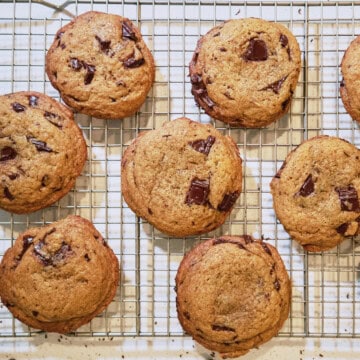
Chewy chocolate chip cookies with melted chocolate chunks cooling on wire rack

Ultimate Chewy Chocolate Chip Cookies

Sherisse'
These bakery-style chocolate chip cookies use all brown sugar for incredible chewy texture that lasts for days. Melted butter creates dense, rich cookies while hand-chopped Ghirardelli chocolate stays perfectly melty. Freeze dough balls for fresh-baked cookies anytime!
Prep Time 15 minutes
Cook Time 13 minutes
Chill Time 2 hours
Total Time 2 hours 28 minutes
Course Dessert
Cuisine American
Servings 28 cookies
Calories 180 kcal

Equipment

  • Kitchen scale (recommended - measures grams and milliliters)
  • Microwave-safe bowl or small saucepan
  • Large mixing bowl
  • Wooden spoon or sturdy spatula
  • Cookie scoop (2-3 Tbsp/2 oz size)
  • Baking sheets
  • Parchment paper
  • Wire cooling rack

Ingredients
  

  • 16 tablespoon unsalted butter (Vital Farms, Kerrygold, or Trader Joe's recommended) 227g
  • 10 oz light brown sugar, packed 280g
  • 1 large egg
  • 1 large egg yolk
  • 2 tablespoon milk 30ml - whole milk or oat milk both work
  • 20 g vanilla extract about 4 tsp
  • 12 oz bread flour or all-purpose flour 340g
  • 7-8 g salt about 1 tsp
  • 7-8 g baking soda about 1 teaspoon - must be fresh
  • 12 oz Ghirardelli Semi-Sweet Baking Chocolate, chopped into chunks OR Trader Joe's square chocolate chips OR Ghirardelli chocolate chips 340g - three 4oz bars, or 2 bars (8oz) if adding nuts

Instructions
  

  • Melt the butter (16 Tbsp/227g) in a microwave-safe bowl or on the stovetop. Let cool to room temperature (important - hot butter will cook the eggs).
  • In a large bowl, combine melted butter and brown sugar (10 oz/280g). Mix with a wooden spoon or spatula until well combined and smooth.
  • Add egg, egg yolk, milk (2 Tbsp/30ml), and vanilla extract (20g). Mix until smooth and creamy, about 1 minute.
  • Add flour (12 oz/340g), salt (7-8g), and baking soda (7-8g). Mix just until no dry streaks remain - don't overmix. The dough will be soft and slightly sticky.
  • Fold in chocolate chunks (12 oz/340g) until evenly distributed throughout the dough.
  • Refrigerate dough for 2-4 hours (or overnight) until firm enough to scoop. This step is crucial for texture and prevents overspreading.
  • Preheat oven to 375°F (190°C). Line baking sheets with parchment paper.
  • Scoop dough into 2-3 tablespoon portions (about 2 oz each) and place 2-3 inches apart on prepared sheets.
  • Bake for 11-13 minutes until edges are golden brown but centers still look slightly underdone. They'll continue cooking on the pan.
  • Let cool on baking sheet for 5 minutes, then transfer to a wire rack.
  • FOR FREEZE-AHEAD: After chilling dough, scoop into portions (2-3 tablespoon each) and place on a parchment-lined baking sheet. Flash freeze for 2-3 hours until dough balls are completely solid. Transfer to freezer bags or airtight container. Freeze for up to 3 months.
  • TO BAKE FROM FROZEN: DO NOT THAW. Preheat oven to 375°F (190°C). Place frozen dough balls on parchment-lined sheet, 2-3 inches apart. Bake 14-16 minutes until edges are golden. Let cool on pan 5 minutes. Prep them on the baking sheet, then when oven is preheated, take them straight from freezer to oven.
  • QUICK FREEZE METHOD: Put pre-scooped cookie dough in the freezer for 2 hours and bake from there. They turn out even thicker than regular chilled dough!

Notes

Why This Recipe Works:
All Brown Sugar: Creates incredibly chewy cookies with deep caramel flavor. Brown sugar attracts and holds moisture, keeping cookies soft for days.
Melted Butter Method (Alton Brown): Produces denser, chewier cookies with more intense flavor. The cooling step prevents cooking the eggs.
Bread Flour Option: Higher protein content (12-14%) creates more gluten structure, resulting in thicker, chewier cookies. All-purpose flour works fine but produces slightly thinner cookies.
Extra Egg Yolk (Alton Brown trick): Adds richness and fat for tenderness while the whole egg provides structure.
Extra Vanilla (20g): Most recipes use 1-2 teaspoons. I'm doubling or tripling it to 4 teaspoons. Think of it like salting your pasta water to taste like sea water - it's a must. Is it expensive? Yes, especially if you're using real vanilla extract or vanilla beans. But just like the butter, there's a taste difference. The vanilla amplifies the caramel notes from brown sugar.
Fresh Leavening: Test baking soda by adding ½ teaspoon to 2 tablespoon hot water - it should fizz vigorously. Replace if older than 6 months.
Chocolate Options:
- Ghirardelli Baking Bars (recommended): Chop into irregular ½-3/4 inch chunks, gives about 2 chunks per bite
- Trader Joe's square chocolate chips: Work great!
- Ghirardelli chocolate chips: Also work great!
- Standard chocolate chips: Work perfectly fine
- Scale back: Use 2 bars (8 oz) instead of 3 if adding nuts or want less chocolate
Butter Options:
1. Vital Farms (first choice)
2. Kerrygold (when Vital Farms not available)
3. Trader Joe's (the OG)
Milk: Whole milk or oat milk both work - tested both!
Storage:
- Room Temperature: 5 days in airtight container
- Refrigerated: 2 weeks in airtight container
- Frozen (baked): 3 months
- Frozen (unbaked dough): 3 months - bake directly from frozen
Freeze-Ahead Success: Tested for Thanksgiving - traveled 5 hours with frozen dough in cooler with ice packs. Baked at destination, perfect!
Troubleshooting:
Cookies spreading too much: Make sure dough was chilled 2-4 hours, check baking soda is fresh, ensure flour measured correctly (340g), try bread flour.
Cookies too cakey: Don't overmix after adding flour, use 1 egg + 1 yolk (not 2 whole eggs), reduce baking time slightly.
Denver Altitude Note: Years ago when my cookie recipe needed a facelift, I made these in Denver and they spread into one giant cookie-pancake. The concept still applies: at high altitudes, reduce baking soda slightly and add 2-3 tablespoon more flour.
Nutrition information is automatically calculated and should be considered an estimate. Actual nutritional values may vary based on ingredients used, portion sizes, and preparation methods.

Nutrition

Serving: 1cookieCalories: 180kcalCarbohydrates: 23gProtein: 2gFat: 9gSaturated Fat: 5gCholesterol: 25mgSodium: 180mgFiber: 1gSugar: 14g
Keyword bakery style cookies, brown sugar cookies, chewy cookies, chocolate chip cookies, freeze ahead cookies, Ghirardelli chocolate, melted butter cookies, thick cookies

Tried this recipe?

Mention @homeandfed or tag #homeandfed!

FAQ

Where did this recipe come from?

I've been making chocolate chip cookies since high school—over 15 years of testing, tweaking, and perfecting. This is my ultimate version after countless batches.

What's the altitude disaster in Denver you mentioned?

I made these cookies while visiting family in Denver and didn't account for the 5,000+ ft elevation. They spread into one giant cookie-pancake! At high altitudes, reduce baking soda slightly and add 2-3 tablespoon more flour.

Were you inspired by any specific recipes?

Yes! Alton Brown's melted butter method and the extra egg yolk trick, plus Silos Baking Co.'s (Joanna Gaines' bakery) thick, chewy texture were both major inspirations.

Why all brown sugar instead of mixing white and brown?

Brown sugar attracts and holds onto moisture. Using 100% brown sugar creates incredibly chewy cookies that stay soft for days with deep caramel flavor.

How long did it take you to perfect this recipe?

Over 15 years! What started as high school baking with imitation vanilla and questionable ingredients has evolved through countless iterations into this version I'm finally proud to share.

What butter do you use?

My first choice is Vital Farms (after reading a Serious Eats article on butter quality). When that's not available, I use Kerrygold. My third option is Trader Joe's butter, which has been my OG since the beginning.

Can I use all-purpose flour instead of bread flour?

Absolutely! All-purpose flour works perfectly. You'll get slightly thinner, more tender cookies, but they'll still be delicious. Bread flour just gives you extra thickness and chew thanks to its higher protein content (12-14% vs 10-12%).

Can I use salted butter instead of unsalted?

Yes, but reduce or omit the added salt. Salted butter contains about ¼ teaspoon of salt per stick, so you'd need to adjust accordingly. I prefer unsalted butter so I can control the exact salt level.

Can I use dark brown sugar instead of light brown sugar?

Yes! Dark brown sugar has more molasses, which will give you even deeper flavor and slightly chewier texture. The cookies will be darker in color and have a more pronounced caramel/molasses taste.

What if I only have white sugar, not brown sugar?

You can make your own brown sugar by mixing 1 cup white sugar with 1 tablespoon molasses. However, the texture won't be quite as chewy as using store-bought brown sugar. For this specific recipe, I really recommend getting light brown sugar since it's the star ingredient.

Can I use chocolate chips instead of chopped chocolate bars?

Absolutely! Standard chocolate chips work great. I prefer hand-chopped Ghirardelli bars because they melt more beautifully and create those gorgeous chocolate pools, but chips are perfectly fine and more convenient.

Can I use milk chocolate or dark chocolate instead of semi-sweet?

Yes! Milk chocolate will make sweeter cookies, while dark chocolate will make them less sweet with more intense chocolate flavor. Use whatever you prefer.

What can I substitute for the milk?

Any milk works! I've tested this with whole milk and oat milk—both work great. You could also use 2%, almond milk, soy milk, or even water in a pinch. The milk adds moisture, but the type isn't critical.

Can I use imitation vanilla extract?

Real vanilla extract gives the best flavor, but imitation vanilla will work if that's what you have. The flavor just won't be quite as complex.

That said, this recipe uses 4 teaspoons of vanilla—that's double or triple what most recipes call for. Think of it like salting your pasta water to taste like sea water. It's a must. The vanilla doesn't just add flavor—it amplifies the caramel notes from the brown sugar and makes everything taste more like itself. If you're going to splurge on one ingredient, make it the vanilla.

Do I really need 4 teaspoons of vanilla? That seems like a lot.

Yes! Most recipes use 1-2 teaspoons. I'm intentionally doubling or tripling it. Is it expensive? Absolutely, especially if you're using real vanilla extract or vanilla beans. But just like with the butter, there's a taste difference. Don't skip this or reduce it—the vanilla is what makes these cookies special.

Can I make these gluten-free?

I haven't tested this new all-brown-sugar version with gluten-free flour, but I was able to swap flour 1:1 with gluten-free flour in my original recipe (which didn't use only brown sugar). A 1:1 gluten-free flour blend (like Bob's Red Mill or King Arthur Measure for Measure) should work. You may need to add ½ teaspoon xanthan gum if your blend doesn't already include it. The texture might be slightly different.

Can I make these dairy-free?

Yes! Replace the butter with vegan butter (I recommend Earth Balance baking sticks) and use non-dairy milk (almond, oat, or soy). Make sure your chocolate is dairy-free as well.

Can I make these vegan?

Use vegan butter, non-dairy milk, and replace the eggs with flax eggs (1 tablespoon ground flaxseed + 3 tablespoons water per egg, let sit 5 minutes). Or use commercial egg replacer. The texture will be slightly different but still good.

Can I reduce the sugar?

You can reduce the brown sugar by up to 2 oz (from 10 oz to 8 oz), but the cookies won't be as sweet and the texture will be slightly less chewy. Brown sugar is key to both flavor and texture in this recipe.

Are these suitable for someone with nut allergies?

Yes! This recipe is nut-free as written. Just make sure your chocolate doesn't have any nut cross-contamination warnings if you have severe allergies.

How do I store these cookies?

Room temperature (recommended): Store in an airtight container for up to 5 days. They stay remarkably soft thanks to the brown sugar. Place parchment paper between layers if stacking.

Refrigerated: Store in an airtight container for up to 2 weeks. Let come to room temperature before serving, or warm briefly in a 300°F oven for 3-5 minutes.

Can I freeze baked cookies?

Yes! Place cooled cookies in an airtight container or freezer bag with parchment paper between layers. Freeze for up to 3 months. Thaw at room temperature for 30 minutes, or warm in a 300°F oven for 5 minutes.

Can I freeze the cookie dough?

Absolutely! This is actually my preferred method:

  1. Scoop chilled dough into portions (2-3 tablespoon each)
  2. Place on parchment-lined sheet
  3. Flash freeze for 2-3 hours until solid
  4. Transfer to labeled freezer bags
  5. Freeze for up to 3 months
  6. Bake directly from frozen at 375°F for 14-16 minutes—DO NOT THAW

I've tested this for real: traveled 5 hours with frozen dough in a cooler with ice packs, baked at my destination—perfect every time.

How do I prevent freezer burn on frozen dough?

Use heavy-duty freezer bags or airtight containers. Press out as much air as possible. Label with date and baking instructions. Use within 3 months for best quality.

Do frozen cookies taste as good as fresh?

Yes! I actually think cookies baked from frozen dough are better than room-temp dough. They stay colder longer in the oven, which prevents overspreading and creates thicker cookies.

Critical: DO NOT let the dough thaw before baking. If you let them thaw, they will spread more. I like to prep them on the baking sheet and then when the oven is preheated, I take them straight from the freezer to the oven. No waiting, no thawing.

Reheating. Microwave: 10-15 seconds per cookie Oven: 5 minutes at 300°F Air fryer: 2-3 minutes at 300°F

Can I halve this recipe?

Yes, but it's harder to accurately divide 1 egg. Either use half a beaten egg (about 1.5 tablespoons), or use 1 small egg and omit the extra yolk. Or just make the full batch—the dough freezes beautifully!

Can I double this recipe?

Absolutely! All the ingredients scale proportionally. You'll just need a very large bowl for mixing. I usually make double batches and freeze half the dough.

I've done doubled batches and used a smaller cookie scoop—2 tablespoon instead of 3 Tbsp. But keep in mind the baking time will change based on how big the cookie dough is. Smaller cookies (2 Tbsp) will bake faster: 15-17 minutes frozen.

How many cookies does this recipe make?

About 12-50 cookies, depending on size. I use a 2-3 tablespoon scoop (about 2 oz), which makes approximately 28 cookies.

Can I make smaller or larger cookies?

Yes! For smaller cookies (1.5 oz): bake 9-11 minutes fresh, 12-14 frozen For giant cookies (4 oz): bake 14-16 minutes fresh, 17-19 frozen

Why do I need to chill the dough?

Chilling is critical! When you chill cookie dough:

  • The butter resolidifies, which slows spreading in the oven
  • The flour fully hydrates, creating better texture
  • The flavors meld and develop
  • You get thicker, bakery-style cookies instead of thin, flat ones

Can I skip chilling if I'm in a hurry?

I really don't recommend it. Your cookies will spread very thin and won't have the same texture. If you're truly desperate, chill for at least 30 minutes in the freezer, but 2-4 hours is ideal.

Quick tip: You can put pre-scooped cookie dough in the freezer for 2 hours and bake from there. They turn out even thicker!

Do I need to bring the dough to room temperature before scooping?

No! The dough should be firm from the fridge. If it's too hard to scoop, let it sit at room temperature for 10 minutes to soften slightly.

Why do my cookies spread too much?

  • Dough wasn't chilled long enough (minimum 2 hours)
  • Baking soda is old/inactive (test it!)
  • Flour was measured incorrectly (use 340g on a scale)
  • Oven temperature too low
  • Butter was too warm when mixing
  • Try using bread flour for less spread

Why are my cookies too cakey?

  • Overmixing after adding flour (mix just until no dry streaks)
  • Using 2 whole eggs instead of 1 egg + 1 yolk
  • Too much flour (weigh it: 340g)
  • Overbaking
  • Oven temperature too high

Why are my cookies not spreading enough?

  • Dough is overchilled (let sit 10 minutes at room temp)
  • Too much flour
  • Oven temperature too high
  • Butter was too cool when mixing

How do I know when they're done?

Edges should be golden brown, but centers will look slightly underdone. They continue cooking on the hot pan after you remove them from the oven. Better to slightly underbake than overbake.

Why are the centers still doughy after cooling?

Either the cookies were significantly underbaked, or your portions were too large. Try baking 1-2 minutes longer, or make slightly smaller cookies.

Can I use a stand mixer?

You can, but it's not necessary. This dough mixes easily with a hand mixer (I use the KitchenAid Go with a wooden spoon or sturdy spatula. If using a stand mixer, be careful not to overmix after adding the flour.

Do I need a kitchen scale?

Not absolutely required, but highly recommended for consistent results. Flour can vary by up to 20% when measured by volume depending on how you scoop it. Weighing gives you 340g every time.

I recommend getting one that measures both grams and milliliters for all your baking - I use this smart kitchen scale!

Can I bake these on a silicone mat instead of parchment paper?

Yes! Silicone baking mats work great. Cookies may spread slightly more than on parchment, so chill the dough thoroughly.

Can I bake these in a convection oven?

Yes. Reduce temperature by 25°F (bake at 350°F instead of 375°F) and start checking at 10 minutes. Convection ovens bake faster and more evenly.

Can I use my air fryer?

Yes! Place 4-6 cookies in air fryer basket with space between them. Bake at 350°F for 8-10 minutes fresh, 10-12 minutes frozen.

My oven runs hot/cold. How do I adjust?

Get an oven thermometer to know your true temperature. If your oven runs 25°F hot, set it to 350°F to get actual 375°F. Adjust baking time as needed.

What's the best way to serve these?

Warm from the oven with cold milk is my favorite! But they're also delicious:

  • As ice cream sandwiches
  • With hot coffee or tea
  • Crumbled over ice cream
  • As part of a holiday cookie tray

What drinks pair well with these cookies?

Cold milk (classic), hot coffee, chai tea, hot chocolate, or even a glass of red wine for adults.

Can I make ice cream sandwiches with these?

Absolutely! Let cookies cool completely, sandwich a scoop of ice cream between two cookies, and optionally roll edges in mini chocolate chips or sprinkles. Wrap individually and freeze.

How long before serving should I bake them?

They're best warm from the oven, but they stay soft and delicious for 5 days at room temperature. For entertaining, you can bake them 1-2 days ahead.

Can I add nuts?

Yes! Add 2-3 oz chopped toasted pecans or walnuts. If you do, scale back the chocolate to 2 bars (8 oz) instead of 3 to maintain the same mix-in ratio.

Can I add other mix-ins?

Absolutely! Try:

  • 1 cup toasted coconut flakes (reduce chocolate to 8 oz)
  • ½ cup toffee bits
  • 1 cup mini M&Ms
  • ½ cup butterscotch chips

Can I make these with brown butter?

Yes, but you'll need to adjust. Brown 18 tablespoon butter (you'll lose about 2 tablespoon to evaporation), let cool completely, and refrigerate until solidified. The flavor will be nuttier and more complex.

Can I add espresso powder?

Yes! Add 1 teaspoon espresso powder to enhance the chocolate flavor without making the cookies taste like coffee.

Can I make these without chocolate?

Absolutely! Though then they're just brown sugar cookies (which are also delicious). You might want to add 1 teaspoon vanilla bean paste for extra flavor.

Looking for other recipes like this? Try these:

The fed journal

welcome home.

More Sweets

Leave a Reply

Your email address will not be published. Required fields are marked *

Recipe Rating